Friday, September 30, 2011

Hello teachers,

This guide will help you to run Ubuntu in your PC without formating your PC/Laptop

Installing Ubuntu inside Windows using VirtualBox

The screenshots in this tutorial use Ubuntu 10.04, but the same principles apply also to Ubuntu 10.10, 11.04, and any future version of Ubuntu. Actually, you can install pretty much any Linux distribution this way.
Introduction
VirtualBox allows you to run an entire operating system inside another operating system. Please be aware that you should have a minimum of 512 MB of RAM. 1 GB of RAM or more is recommended.
Comparison to Dual-Boot
Many websites (including the one you're reading) have tutorials on setting up dual-boots between Windows and Ubuntu. A dual-boot allows you, at boot time, to decide which operating system you want to use. Installing Ubuntu on a virtual machine inside of Windows has a lot advantages over a dual-boot (but also a few disadvantages).
Advantages of virtual installation
  • The size of the installation doesn't have to be predetermined. It can be a dynamically resized virtual hard drive.
  • You do not need to reboot in order to switch between Ubuntu and Windows.
  • The virtual machine will use your Windows internet connection, so you don't have to worry about Ubuntu not detecting your wireless card, if you have one.
  • The virtual machine will set up its own video configuration, so you don't have to worry about installing proprietary graphics drivers to get a reasonable screen resolution.
  • You always have Windows to fall back on in case there are any problems. All you have to do is press the right Control key instead of rebooting your entire computer.
  • For troubleshooting purposes, you can easily take screenshots of any part of Ubuntu (including the boot menu or the login screen).
  • It's low commitment. If you later decide you don't like Ubuntu, all you have to do is delete the virtual hard drive and uninstall VirtualBox.
Disadvantages of virtual installation
  • In order to get any kind of decent performance, you need at least 512 MB of RAM, because you are running an entire operating system (Ubuntu) inside another entire operating system (Windows). The more memory, the better. I would recommend at least 1 GB of RAM.
  • Even though the low commitment factor can seem like an advantage at first, if you later decide you want to switch to Ubuntu and ditch Windows completely, you cannot simply delete your Windows partition. You would have to find some way to migrate out your settings from the virtual machine and then install Ubuntu over Windows outside the virtual machine.
  • Every time you want to use Ubuntu, you have to wait for two boot times (the time it takes to boot Windows, and then the time it takes to boot Ubuntu within Windows).
Installation Process
The first thing you have to do is obtain VirtualBox. Visit the VirtualBox website's download page.Follow these instructions to get a Ubuntu disk image (.iso file).

After you launch VirtualBox from the Windows Start menu, click on New to create a new virtual machine. When the New Virtual Machine Wizard appears, click Next.

You can call the machine whatever you want. If you're installing Ubuntu, it makes sense to call it Ubuntu, I guess. You should also specify that the operating system is Linux.

VirtualBox will try to guess how much of your memory (or RAM) to allocate for the virtual machine. If you have 1 GB or less of RAM, I would advise you stick with the recommendation. If, however, you have over 1 GB, about a quarter your RAM or less should be fine. For example, if you have 2 GB of RAM, 512 MB is fine to allocate. If you have 4 GB of RAM, 1 GB is fine to allocate. If you have no idea what RAM is or how much of it you have, just go with the default.
Click Next.

If this is your first time using VirtualBox (which it probably is if you need a tutorial on how to use it), then you do want to Create new hard disk and then click Next.

Click Next again.

Theoretically, a dynamically expanding virtual hard drive is best, because it'll take up only what you actually use. I have come upon weird situations, though, when installing new software in a virtualized Ubuntu, in which the virtual hard drive just fills up instead of expanding. So I would actually recommend picking a Fixed-size storage.

Ubuntu's default installation is less than 4 GB. If you plan on adding software or downloading large files in your virtualized UBuntu, you should tack on some buffer.
 
Click Finish and wait for the virtual hard drive to be created. This is actually just a very large file that lives inside of your Windows installation.

Click Finish
 
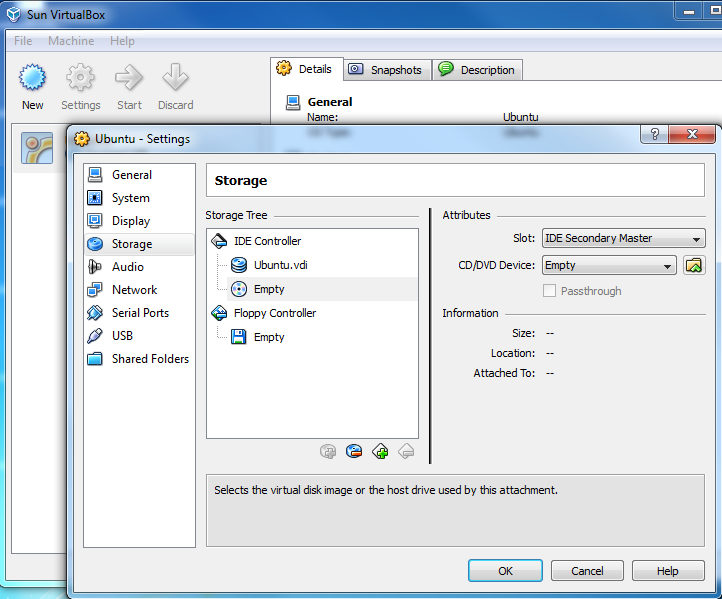
The next thing to do to make the (currently blank) virtual hard drive useful is to add the downloaded Ubuntu disk image (the .iso) boot on your virtual machine. Click on Settings and Storage. Then, under CD/DVD Device, next to Empty, you'll see a little folder icon. Click that, and you can select the Ubuntu .iso you downloaded earlier.

Once you've selected it, click OK.
Then double-click your virtual machine to start it up.

Once it's started up, just follow the regular installation procedure as if you were installing Ubuntu on a real hard drive (instead of a virtual one).

Afterwards, in order to use your virtualized installation (instead of continually booting the live CD), you have to change the CD/DVD Device entry to beEmpty again.


-------------

Warm Regards

Kamlesh Joshi


Gujarat State Trainer | Intel® Teach Program


Mobile:             +91 9979182675      

How to install fonts on Ubuntu 9.04...


Gujarati: 

તમે ઉબંધુ ૯.૦૪ માં અલગ અલગ પ્રકારના ફોન્ટ્સ ઇન્સ્ટોલ કરી શકો છો...

જો તમે માઇક્રોસોફ્ટ વિન્ડોઝ ફોન્ટ સ્થાપિત કરવા માંગો છો, તો તમારાટર્મિનલ ખોલો (/ કાર્યક્રમો / એસેસરીઝ ટર્મિનલ) અને દાખલ કરો:

sudo apt-get install ttf-mscorefonts-installer

For Red Hat Liberation fonts use this terminal line: (This fonts are already installed on Ubuntu 10.04)
sudo apt-get install ttf-liberation
જો તમે કોઈપણ અન્ય ફોન્ટ્સ નેટ પરથી મળી આવેલા અથવા તમારી પાસે હોય તેને વાપરવા માટે આ પગલાંઓ અનુસરો:

તમારા ઉબંધુ સીસ્ટમ માં Places માં HOME ફોલ્ડર પર જાઓ..

"showhiddenfiles" નામનો ઓપ્શન મેનુ બાર માં  view  માં આવેલો છે તેને ટીક કરવો...

પછી નામ સાથે નવું ફોલ્ડર બનાવો ".fonts" (આગળ ડોટ સાથે)

હવે આ નવું ફોલ્ડરમાં  બધાજ ફોન્ટ્સ ને copy કરીને paste કરીદો. . જો તમે તમારા window ફોન્ટ્સ ને copy કરવા માંગતા હો તો તમારા Windows ના ફોન્ટસ ને copy  કરો અને તેને કોઈ pendirve  માં મુકીને આ .fonts  નામના ફોલ્ડર માં paste  કરી શકો છો.... 
હવે તમારા  કમ્પ્યુટર ને  restart  કરો....    

હવે પુનઃપ્રારંભ કરીએ અને નવા ફોન્ટ ઉપયોગ કરીએ...


English:


You can install various fonts in Ubuntu 9.04, 9.10, 10.04 and 10.10 following the next easy tutorials.
If you want to install Microsoft Windows fonts, open your terminal (Applications/Accessories/Terminal) and enter:
sudo apt-get install ttf-mscorefonts-installer
For Red Hat Liberation fonts use this terminal line: (This fonts are already installed on Ubuntu 10.04)
sudo apt-get install ttf-liberation
If you want to install any other fonts you can get from the net or use your font database follow this steps:
  1. Go to your home folder
  2. Enable “Show Hidden Files” option from Nautilus View menu
  3. Then create new folder with name “.fonts” (with dot in front)
  4. Now in new folder copy all your true type fonts. If you want to copy your Windows fonts, you can find it in WINDOWS/Fonts folder.
  5. Now restart and new fonts will be in use.

-------------

Warm Regards

Kamlesh Joshi

Gujarat State Trainer | Intel® Teach Program


Mobile:             +91 9979182675      

Wednesday, December 22, 2010

Wonderful..........

Have a look of this site at least....
http://mrugeshilikethewayim.blogspot.com/
Mrugesh Jani: http://office2010tutorials.blogspot.com/
Mrugesh Jani: http://bollywoodofficiallinks.blogspot.com/
http://mrugeshilikethewayim.blogspot.com/

Monday, November 8, 2010

Well learned philosophy

------------------------------------------
Prove It.
Source Unknown
"Let me explain the problem science has with Jesus Christ." The atheist professor of philosophy pauses before his class and then asks one of his new students to stand, "You're a Christian, aren't you, son?"
"Yes, sir."
"So you believe in God?"
"Absolutely."
"Is God good?"
"Sure! God's good."
"Is God all-powerful? Can God do anything?"
"Yes."
"Are you good or evil?"
"The Bible says I'm evil."
The professor grins knowingly. "Ahh! THE BIBLE!" He considers for a moment. "Here's one for you. Let's say there's a sick person over here and you can cure him. You can do it. Would you help them? Would you try?"
"Yes sir, I would."
"So you're good!"
"I wouldn't say that."
"Why not say that? You would help a sick and maimed person if you could. In fact most of us would if we could. God doesn't."
No answer.
"He doesn't, does he? My brother was a Christian who died of cancer even though he prayed to Jesus to heal him. How is this Jesus good? Hmmm? Can you answer that one?"
No answer. The elderly man is sympathetic. "No, you can't, can you?"
He takes a sip of water from a glass on his desk to give the student time to relax. In philosophy, you have to go easy with the new ones. "Let's start again, young fella. Is God good?"
"Er...Yes."
"Is Satan good?"
"No."
"Where does Satan come from?"
The student falters, "From... God..."
"That's right. God made Satan, didn't he?"
The elderly man runs his bony fingers through his thinning hair and turns to the smirking, student audience. "I think we're going to have a lot of fun this semester, ladies and gentlemen."
He turns back to the Christian.
"Tell me, son. Is there evil in this world?"
"Yes, sir."
"Evil's everywhere, isn't it? Did God make everything?"
"Yes."
"Who created evil?
No answer.
"Is there sickness in this world? Immorality? Hatred? Ugliness. All the terrible things. Do they exist in this world?"
The student squirms on his feet.
"Yes."
"Who created them?"
No answer.
The professor suddenly shouts at his student. "WHO CREATED THEM? TELL ME, PLEASE!"
The professor closes in for the kill and climbs into the Christian's face. In a still small voice:
"God created all evil, didn't He, son?"
No answer.
The student tries to hold the steady, experienced gaze and fails. Suddenly the lecturer breaks away to pace the front of the classroom like an aging panther. The class is mesmerized.
"Tell me," he continues, "how is it that this God is good if He created all evil throughout all time?" The professor swishes his arms around to encompass the wickedness of the world. "All the hatred, the brutality, all the pain, all the torture, all the death and ugliness and all the suffering created by this good God is all over the world, isn't it, young man?"
No answer.
"Don't you see it all over the place? Huh?"
Pause.
"Don't you?"
The professor leans into the student's face again and whispers, "Is God good?"
No answer.
"Do you believe in Jesus Christ, son?"
The student's voice betrays him and cracks, "Yes, professor. I do."
The old man shakes his head sadly, "Science says you have five senses you use to identify and observe the world around you. Have you ever seen Jesus?"
"No, sir. I've never seen Him."
"Then tell us if you've ever heard your Jesus?"
"No, sir. I have not."
"Have you ever felt your Jesus, tasted your Jesus, or smelt your Jesus? In fact, do you have any sensory perception of your God whatsoever?
No answer.
"Answer me, please."
"No, sir, I'm afraid I haven't."
"You're AFRAID you haven't?"
"No, sir."
"Yet you still believe in him?"
"...yes..."
"That takes FAITH!"
The professor smiles sagely at the underling, "According to the rules of empirical, testable, demonstrable protocol, science says your God doesn't exist. What do you say to that, son? Where is your God now?"
The student doesn't answer.
"Sit down, please." The Christian sits...Defeated.
Another Christian raises his hand, "Professor, may I address the class?" The professor turns and smiles, "Ah, another Christian in the vanguard! Come, come, young man. Speak some proper wisdom to the gathering." The Christian looks around the room, "Some interesting points you are making, sir. Now I've got a question for you. Is there such thing as heat?"
"Yes," the professor replies.
"There's heat." "Is there such a thing as cold?"
"Yes, son, there's cold too."
"No, sir, there isn't."
The professor's grin freezes. The room suddenly goes very cold. The second Christian continues,
"You can have lots of heat, even more heat, superheat, mega-heat, white heat, a little heat or no heat but we don't have anything called 'cold.' We can hit 458 degrees below zero, which is no heat, but we can't go any further after that. There is no such thing as cold, otherwise we would be able to go colder than 458. You see, sir, cold is only a word we use to describe the absence of heat. We cannot measure cold. Heat we can measure in thermal units because heat is energy. Cold is not the opposite of heat, sir, just the absence of it."
Silence. A pin drops somewhere in the classroom.
"Is there such a thing as darkness, professor?"
"That's a dumb question, son. What is night if it isn't darkness? What are you getting at...?"
"So you say there is such a thing as darkness?"
"Yes..."
"You're wrong again, sir. Darkness is not something, it is the absence of something. You can have low light, normal light, bright light, flashing light but if you have no light constantly you have nothing and it's called darkness, isn't it? That's the meaning we use to define the word. In reality, Darkness isn't. If it were, you would be able to make darkness darker and give me a jar of it. Can you give me a jar of darker darkness, professor?"
Despite himself, the professor smiles at the young effrontery before him. This will indeed be a good semester.
"Would you mind telling us what your point is, young man?"
"Yes, professor. My point is, your philosophical premise is flawed to start with and so your conclusion must be in error."
The professor goes toxic, "Flawed? How dare you!"
"Sir, may I explain what I mean?"
The class is all ears.
"Explain... Oh, explain..."
The professor makes an admirable effort to regain control. Suddenly he is affability itself. He waves his hand to silence the class, for the student to continue.
"You are working on the premise of duality," the Christian explains. "That for example there is life and then there's death; a good God and a bad God. You are viewing the concept of God as something finite, something we can measure. Sir, science cannot even explain a thought. It uses electricity and magnetism but has never seen, much less fully understood them. To view death as the opposite of life is to be ignorant of the fact that death cannot exist as a substantive thing. Death is not the opposite of life, merely the absence of it."
The young man holds up a newspaper he takes from the desk of a neighbor who has been reading it. "Here is one of the most disgusting tabloids this country hosts, professor. Is there such a thing as immorality?"
"Of course there is, now look..."
"Wrong again, sir. You see, immorality is merely the absence of morality. Is there such thing as injustice? No. Injustice is the absence of justice. Is there such a thing as evil?" The Christian pauses, "Isn't evil the absence of good?"
The professor's face has turned an alarming color. He is so angry he is temporarily speechless. The Christian continues, "If there is evil in the world, professor, and we all agree there is, then God, if He exists, must be accomplishing a work through the agency of evil. What is that work, God is accomplishing? The Bible tells us it is to see if each one of us will, of our own free will, choose good over evil."
The professor bridles, "As a philosophical scientist, I don't view this matter as having anything to do with any choice; as a realist, I absolutely do not recognize the concept of God or any other theological factor as being part of the world equation because God is not observable."
"I would have thought that the absence of God's moral code in this world is probably one of the most observable phenomena going," the Christian replies. "Newspapers make billions of dollars reporting it every week! Tell me, professor, do you teach your students that they evolved from a monkey?"
"If you are referring to the natural evolutionary process, young man, yes, of course I do."
"Have you ever observed evolution with your own eyes, sir?"
The professor makes a sucking sound with his teeth and gives his student a silent, stony stare.
"Professor. Since no one has ever observed the process of macro-evolution at work and cannot even prove that this process is an ongoing endeavor, are you not teaching your opinion, sir? Are you now not a scientist, but a priest?"
"I'll overlook your impudence in the light of our philosophical discussion. Now, have you quite finished?" the professor hisses.
"So you don't accept God's moral code to do what is righteous?"
"I believe in what is. That's science!"
"Ahh! SCIENCE!" the student's face splits into a grin. "Sir, you rightly state that science is the study of observed phenomena. Science too is a premise which is flawed."
"SCIENCE IS FLAWED?" the professor splutters. The class is in uproar. The Christian remains standing until the commotion has subsided. "To continue the point you were making earlier to the other student, may I give you an example of what I mean?" The professor wisely keeps silent. The Christian looks around the room, "Is there anyone in the class who has ever seen the professor's brain?"
The class breaks out in laughter. The Christian points towards his elderly, crumbling tutor, "Is there anyone here who has ever heard the professor's brain, felt the professor's brain, touched or smelt theprofessor's brain?" No one appears to have done so.
The Christian shakes his head sadly, "It appears no one here has had any sensory perception of the professor's brain whatsoever. Well, according to the rules of empirical, testable, demonstrable protocol, science, says the professor has no brain."
The class is in chaos. The Christian sits, because that is what a chair is for.

"Professing to be wise, they became fools."